
Burst Pipes and Water Damage in Connecticut: Repair It, File a Claim, or Sell the House As-Is?
The neighbor’s text said it all: “There’s water coming out under your front door.”
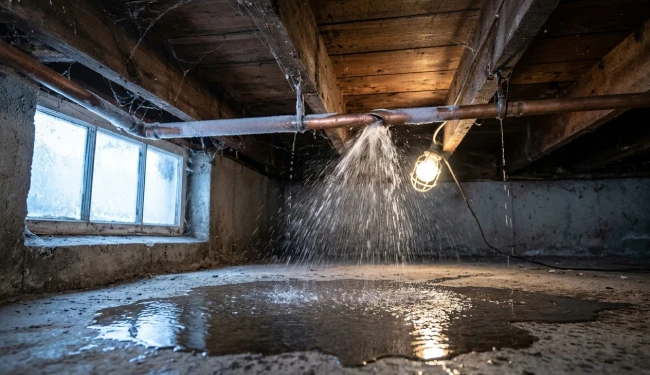
Or maybe you found it yourself — the hiss behind a wall, the ceiling bulging over the dining room table, the basement floor shining under the light. A burst pipe doesn’t come with a warning. One minute the house is fine. The next, water is pouring into rooms that were dry an hour ago, and every decision feels urgent.
Burst pipe water damage can turn a normal Connecticut winter week into a crisis, and it hits hardest in houses where nobody is home to catch it early. This guide covers what to do in the first 48 hours, how insurance treats frozen pipes in a vacant house, and how to decide whether to repair, file a claim, or sell. If the water came from a storm instead, start with our complete guide to selling a water-damaged house in Shelton.
Whatever you decide, Helpful Home Buyers can give you a written number for the house as it stands — so you can weigh a sale against the repair bill instead of guessing.
Get a fast, no obligation cash offer!
Fill out this form to get started on your fair all-cash offer.
Get Your Fair Cash Offer
Fill In This Form To Get Your No-Obligation All Cash Offer Started!
"*" indicates required fields
Why Pipes Burst in a Connecticut Winter
Water expands when it freezes. A pipe in an outside wall, an attic, a crawlspace or an unheated room can freeze solid during a cold snap. The pipe can crack while it’s frozen, and you may not see a drop until it thaws. Then it runs full force — and if no one is there, it can run for days.
Older houses are more exposed. In the South Central Connecticut region around New Haven, the median home was built in 1963. Plenty of those houses have plumbing in outside walls, thin insulation, and basements that were never meant to stay warm. That describes plenty of houses in Hamden, from Spring Glen to the neighborhoods near Sleeping Giant. If you’re selling an older house in Hamden, a winter pipe failure is a real risk to plan around.
Vacant houses are the most at risk. When a house sits empty — during an estate, a move or a long hospital stay — a furnace that quits or an oil tank that runs dry can go unnoticed for days. If you’re handling a parent’s house from another state, our guide to selling your parents’ Connecticut house from out of state covers how to manage it from a distance.
The First 48 Hours After a Burst Pipe
If you’re standing in the water right now, do these things in order:
- Shut off the water. Find the main shutoff — often where the water line comes into the basement — and turn it off. If water is near outlets or the electrical panel, stay out and call an electrician or the utility.
- Document everything. Take photos and video of every wet room, the broken pipe and anything damaged before you move it.
- Call your insurance company. Report the loss promptly. Ask what they need from you and whether they’ll send an adjuster or a water-mitigation company.
- Start drying. The U.S. Environmental Protection Agency says wet materials should be dried within 24 to 48 hours to help prevent mold. Fans, dehumidifiers, and pulling up soaked carpet and padding all help.
Take these steps even if you already know you want to sell. Stopping the water and documenting the damage protects you whether you repair, file a claim, or sell the house as-is.
CT Homeowners Love Us!
Here’s how HHB helped people move forward—quickly, quietly, and on their own terms.

Sharon Kiraly
Fairfield, CT
..he made a very fair and equitable offer to purchase my home of 30 years and was sensitive to all my cherished memories of living there, raising my family, and then parting, making it a bearable transition.
I’m very grateful to Daniel Riccio.
Louis - Macdonald
Road Trumbull, CT
The entire process ran smooth and the company was extremely accommodating to our family's needs. They were understanding and gave us the opportunity to have extra time after the sale to sort through our belongings. Whatever we no longer wanted they kindly let us keep on the property and they took care of it for us.
I would highly recommend working with them!
Karen Mavilia
Howe Ave Shelton, CT
Second time with Dan Riccio and and his all-star team -- a rental property in 2019, now my home in January 2025. Flawless synchronicity from start to finish. Downright upright ethics -- so rare today. All commitments met and expectations exceeded. 24/7 project management, impressive array of skilled contractors resolved all issues in a timely professional manner. Best of all, I simply took what I wanted and left all remaining contents.
Will Insurance Pay for Burst Pipe Water Damage in a Vacant House?
Homeowners insurance generally covers sudden, accidental water damage, like a pipe that bursts. That’s the good news. The catch is in the fine print. Many policies exclude freeze damage in a vacant or unheated house unless you kept the heat on or shut off the water and drained the pipes. Many also limit coverage once a house has been empty for about 60 days. If the house was sitting empty when the pipe burst, read your policy’s vacancy and freeze sections before you assume you’re covered.
The prevention advice is simple. The American Red Cross recommends keeping the heat set no lower than 55°F when you’re away, opening cabinet doors so warm air reaches the pipes, and letting faucets drip in extreme cold. Ready.gov’s winter weather guidance covers the rest of the cold-weather basics. Your insurer may ask whether the heat was on.
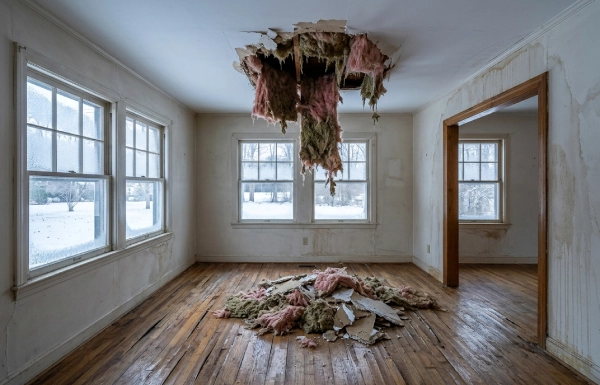
One more thing to know: a burst pipe and a flood are treated very differently. Since July 1, 2026, Connecticut insurers must tell homeowners and renters policyholders that their policy doesn’t cover flood. If your claim stalls or you don’t understand a denial, the Connecticut Insurance Department has consumer resources, and an attorney can review your options.
Repair, Claim, or Sell As-Is: Three Honest Paths
Path 1: Repair the house, then keep it or list it
If the damage is limited and the insurance is paying, repairing can make sense. Just plan for the calendar. A cold snap hits many houses at once, so restoration crews and plumbers can be booked out for weeks in January. Every week of waiting is another week of carrying costs, and another week for hidden moisture to spread.
Path 2: File the claim, then decide
Some owners wait for the adjuster’s number before choosing. That’s reasonable, but claims take time, and a denial under a vacancy or freeze exclusion can leave you paying for everything yourself. You may be able to sell while a claim is open — talk to your adjuster and your attorney about how that works, and who keeps the claim money, before you sign anything. If you have a mortgage, your lender may also have a say in how repair money is used.
Path 3: Sell the house as-is
If the repairs are bigger than your budget, your patience or your distance from the house, selling as-is ends the problem in one step. You don’t rebuild. You don’t manage contractors. You get a written number for the house as it stands and pick a closing date. Here’s more on how to sell a water-damaged home in Connecticut without fixing it first.
Selling? You Still Have to Disclose the Water Damage
Once you know about water damage, it belongs on the Residential Property Condition Report, which asks about plumbing problems and water damage. Since July 1, 2025, the report has also included flood questions, including whether any structure on the property has had water get in from seepage or a natural flood. Our guide to the flood questions on Connecticut’s condition report explains how to answer each one honestly. A buyer will see the damage at the walkthrough anyway — being upfront just makes everything move faster.
How Helpful Home Buyers Handles a Burst-Pipe House
Dan and Meghan have spent more than 15 years buying Connecticut houses in any condition, water damage included. Helpful Home Buyers comes out once for a walkthrough — even if the water is shut off and the heat is out. You don’t have to tear out wet drywall, haul away ruined furniture or clean anything first. Within 24 hours, you get a written, no-obligation cash offer, and you can close in as little as about 10 days.
If you live out of state, that matters even more. You don’t have to drive up every weekend to meet contractors or wait on a restoration crew. One walkthrough, one written number, and a closing date that works for you.
Frequently Asked Questions
Navigation
→ Back to: Sell a Water-Damaged House in Shelton, CT
→ Back to: Connecticut’s Flood Disclosure Law: What Home Sellers Must Answer
→ Next: The FEMA 50% Rule for Flood-Damaged Connecticut Homes
→ Service area: Sell Your House in Hamden, CT
Ready to Stop the Damage Clock on Your Burst-Pipe House?
Every week a water-damaged house sits, the repair list gets longer. Tell us what happened and let us walk through it once. Within 24 hours, you’ll have a written, no-obligation cash offer from Helpful Home Buyers — no repairs, no cleanup, and no need to manage it from wherever you live. Request your as-is cash offer and choose your own closing date.