
The FEMA 50% Rule: What It Means for Your Flood-Damaged Connecticut Home — and Your Options
The letter from the building department used two words you didn’t expect: “substantially damaged.”
You thought the hard part was over. The water went down, the mud got shoveled out, and the contractor wrote up a repair estimate. Then the town reviewed it. Now you’re being told you can’t simply put the house back the way it was — it has to meet today’s floodplain rules first. For a lot of owners, that means raising the whole house.
That’s the FEMA 50% rule, and it catches owners off guard after a flood. This guide explains what the rule says, who actually makes the call, what flood insurance will pay toward it, and what your choices are if elevating isn’t realistic. If you’re still sorting out what to do with a damaged house in general, our overview of selling a water-damaged house in Shelton, CT is a good place to start.
And if rebuilding to code isn’t in the cards, know this: Helpful Home Buyers buys flood-damaged houses in any condition, so a substantial-damage letter doesn’t have to mean a rebuild.
Get a fast, no obligation cash offer!
Fill out this form to get started on your fair all-cash offer.
Get Your Fair Cash Offer
Fill In This Form To Get Your No-Obligation All Cash Offer Started!
"*" indicates required fields
What the FEMA 50% Rule Actually Says
The rule applies to buildings in a Special Flood Hazard Area — the high-risk zones on FEMA flood maps that begin with A or V. If the cost to repair a damaged building would equal or exceed 50% of the building’s market value before the damage, it’s considered substantially damaged. A substantially damaged house generally has to be brought into compliance with current floodplain rules before it’s rebuilt. FEMA’s fact sheet on substantial improvement and substantial damage lays out the details.
Three details trip people up. First, the comparison uses the value of the building itself, not the land under it. Second, federal rules define substantial damage as damage of any origin, so a fire or a burst pipe in a floodplain house can trigger the same 50% test as a flood. Third, the repair cost is the full cost of putting the house back the way it was before the damage, not just the parts you planned to fix.
Who Decides: Your Town, Not FEMA
FEMA writes the national rules, but it doesn’t inspect your house. The decision belongs to your community’s floodplain administrator or building official. They look at the repair cost and the building’s pre-damage market value and decide whether the house is substantially damaged. After a big flood, that review can happen house by house across whole neighborhoods.
Maybe the town used a market value that seems too low, or a repair estimate that includes work you didn’t need. If you think the numbers are wrong, ask how the determination was made and what you can submit. A licensed appraiser and an attorney can help you decide whether it’s worth pushing back.
What It Means to Elevate, Relocate or Demolish
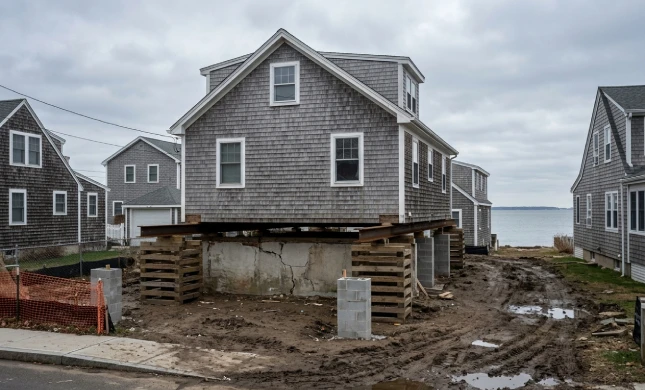
For most homes, compliance means raising the house to or above the base flood elevation shown on the FEMA map. That usually involves lifting the structure, building a new foundation, and moving equipment like the furnace and electrical panel up out of the water’s reach. The other options are moving the house out of the flood zone, or tearing it down and building new to current rules.
None of these are small projects, and costs vary widely by house, foundation and site. Get real estimates before you decide anything. It also helps to know exactly what your flood policy will — and won’t — put toward the work.
CT Homeowners Love Us!
Here’s how HHB helped people move forward—quickly, quietly, and on their own terms.

Sharon Kiraly
Fairfield, CT
..he made a very fair and equitable offer to purchase my home of 30 years and was sensitive to all my cherished memories of living there, raising my family, and then parting, making it a bearable transition.
I’m very grateful to Daniel Riccio.
Louis - Macdonald
Road Trumbull, CT
The entire process ran smooth and the company was extremely accommodating to our family's needs. They were understanding and gave us the opportunity to have extra time after the sale to sort through our belongings. Whatever we no longer wanted they kindly let us keep on the property and they took care of it for us.
I would highly recommend working with them!
Karen Mavilia
Howe Ave Shelton, CT
Second time with Dan Riccio and and his all-star team -- a rental property in 2019, now my home in January 2025. Flawless synchronicity from start to finish. Downright upright ethics -- so rare today. All commitments met and expectations exceeded. 24/7 project management, impressive array of skilled contractors resolved all issues in a timely professional manner. Best of all, I simply took what I wanted and left all remaining contents.
How Much Flood Insurance Pays Toward the FEMA 50% Rule
If you carry a National Flood Insurance Program policy, Increased Cost of Compliance coverage can pay up to $30,000 toward bringing the house into compliance. To qualify, two things generally have to be true. The building is in a high-risk flood zone. And your community’s building official has determined that flooding substantially damaged it — 50% or more of its pre-flood market value. In towns with a repeat-damage rule, repeated flood losses can also qualify. ICC is meant for compliance costs, not the flood repairs themselves, so ask your adjuster how it fits with your building claim and the NFIP’s payment limits.
For many houses, $30,000 may cover only part of an elevation project — which is why real estimates matter. Owners who stay will likely need flood insurance going forward. Under the NFIP’s Risk Rating 2.0, most premium increases on a primary residence are capped at 18% a year, but some properties, including certain substantially damaged ones, can rise up to 25% a year. New policies typically have a 30-day waiting period.
Connecticut Flood Risk, From the Valley to the West Haven Shoreline
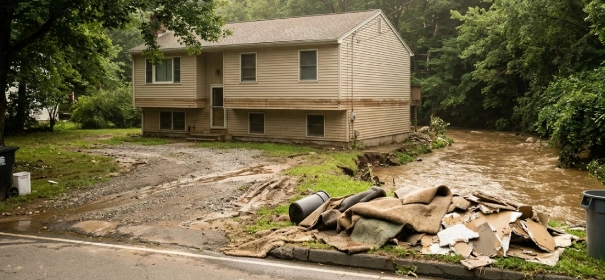
Connecticut has seen what the water can do. On August 18 and 19, 2024, historic rainfall caused flooding and landslides in Fairfield, Litchfield and New Haven counties. Near Newtown, Seymour and Middlebury, up to about 10 inches of rain fell in 24 hours. Oxford, Southbury and Seymour were among the hardest-hit towns, and the storm led to federal major disaster declaration DR-4820. If you’re selling a flood-damaged house in Seymour after that storm, you may be living this story right now.
The shoreline faces a different kind of risk. Connecticut’s official planning scenario, explained on the state DEEP’s sea-level rise page, is about 20 inches of rise in Long Island Sound by 2050. UConn’s climate institute, CIRCA, estimates that with that much rise, today’s 1-in-100-year coastal storm could become roughly a 1-in-10-year storm. In a coastal city like West Haven, with neighborhoods along the Sound near Savin Rock, that raises the stakes on every repair-or-rebuild decision. If you’re weighing whether to rebuild or sell a house in West Haven, the 50% rule belongs in the math.
Your Options When the Town Says “Substantially Damaged”
- Elevate and stay. Use ICC, savings, other insurance money and possibly a loan to raise the house and rebuild. This can make sense if you plan to stay for many years and the numbers work.
- Relocate or rebuild. Move the house, or tear it down and build new to current rules. These are the biggest projects of all, and they take serious money and time.
- Sell the house as it stands. Sell to a buyer who can take on the compliance work, and use the proceeds to move on. You skip the elevation project, the permits and the contractor schedule.
Whatever you choose, disclose what you know. Since July 1, 2025, Connecticut’s condition report asks about flood claims, disaster aid and water in the house, and a substantial-damage determination is something any buyer will want to know. Our guide to Connecticut’s flood disclosure rules for sellers explains how to answer. If you’re leaning toward selling, here’s how to sell a flood-damaged home in Connecticut as-is without taking on the rebuild yourself.
How Helpful Home Buyers Looks at a Substantially Damaged House
Dan and Meghan have spent more than 15 years buying Connecticut houses in any condition. When a house has a substantial-damage determination, Helpful Home Buyers prices it as it stands, with the compliance work in mind. You don’t elevate first. You don’t pull permits first. One walkthrough, a written, no-obligation cash offer within 24 hours, and a closing in as little as about 10 days — or on the date you choose.
Frequently Asked Questions
Navigation
→ Back to: Sell a Water-Damaged House in Shelton, CT
→ Back to: Connecticut’s Flood Disclosure Law: What Home Sellers Must Answer
→ Back to: Burst Pipes and Water Damage: Repair, Claim, or Sell As-Is?
→ Service area: Sell Your House in West Haven, CT
Ready to Sell Without Elevating the House First?
You don’t have to take on a project you never planned for. Tell us about the house and the town’s determination, let us walk through it once, and you’ll have a written cash offer within 24 hours — no repairs, no elevation, no commissions. Ask for a cash offer on the house as it stands and pick the closing date that fits your next step.