
Tired of Being a Landlord? Sell Your Rental Property in Shelton, CT — Tenants and All
You bought a rental. Somewhere along the way, it became a second job you never applied for.
Maybe it's the two-family in Bridgeport you bought so the rent would cover the mortgage. Maybe it's the Shelton duplex you kept when your family outgrew it, or the Waterbury three-family your father left you. Either way, the deal has changed. The 10 p.m. texts about no heat. The tenant who always paid, until the hours at work got cut. The lost rent every time someone moves out. And a rulebook that gets longer every year.
This guide is for landlords who are worn down and weighing whether to sell a rental property in Shelton, CT, or anywhere else in Connecticut. It covers the rules that changed, what an eviction really involves, how selling with tenants in place works, and what a cash sale with Helpful Home Buyers — Dan and Meghan, right here in Shelton — looks like from your side of the table.
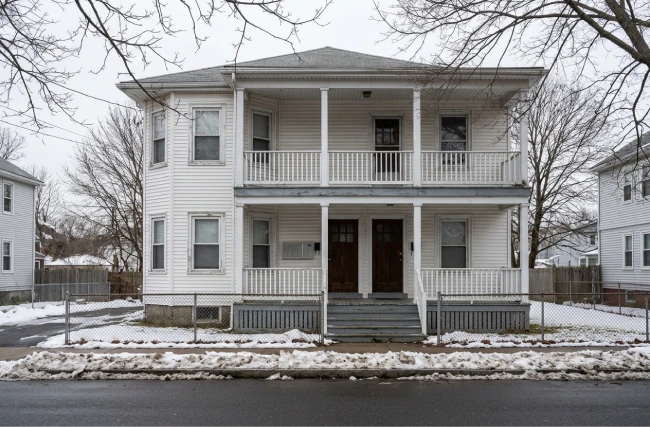
Get a fast, no obligation cash offer!
Fill out this form to get started on your fair all-cash offer.
Get Your Fair Cash Offer
Fill In This Form To Get Your No-Obligation All Cash Offer Started!
"*" indicates required fields
Why So Many Connecticut Landlords Decide to Sell Their Rental Property
It's rarely one thing. It's the pile-up. A boiler quits in January. A unit sits empty for six weeks while you paint, patch and screen applicants. The tax bill jumps after a revaluation — the same squeeze we cover in our guide on what to do when your property taxes are too high. The insurance renewal comes in higher. And every one of those costs lands on you, whether the rent comes in or not.
Connecticut's buildings make the job harder. The state's median home was built in 1966. In the Naugatuck Valley region, which includes Waterbury, about one in five homes was built in 1939 or earlier. The two- and three-families of Bridgeport, Hartford and Waterbury have old porches, old boilers, old wiring and, very often, old lead paint. Keeping them safe and legal is real work.
Then there's the human side. Most small Connecticut landlords aren't companies. They inherited a two-family, kept a first home as a rental, or bought a building for retirement. They know their tenants by name, and many still work full time. The side project has become the thing that keeps them up at night.
The Connecticut Landlord Rules That Changed Under Your Feet
None of the recent changes is unreasonable on its own. Tenants deserve their deposits back on time, and children deserve homes without lead hazards. But for an owner with one or two buildings and a day job, the rules have stacked up fast:
- Security deposits: 21 days, not 30. Under CGS § 47a-21, you must return a tenant's deposit plus interest within 21 days of move-out, or 15 days after you receive a written forwarding address, whichever is later. The deadline was 30 days until October 2023. Miss it and you can owe double. Deposits are capped at two months' rent (one month for tenants 62 or older), and the Connecticut Department of Banking security deposit rules list the interest rate, which is set each year (0.49% for 2026).
- Application fees: screening reports only. Since Public Act 23-207, you can't charge a fee to process an application. You can charge only for a tenant-screening report, up to $50 plus any yearly inflation adjustment set by the Department of Housing.
- Rent increases: 45 days' written notice. For leases entered or renewed on or after October 1, 2024, CGS § 47a-4e requires at least 45 days' written notice before a rent increase. There is still no statewide rent cap.
- Fair rent commissions in more towns. Local fair rent commissions (CGS § 7-148b) can reduce, phase in or delay increases they find "harsh and unconscionable." A 2022 law required towns with 25,000 or more people to create one by July 1, 2023. In the November 2025 special session, lawmakers lowered that line to 15,000 people, which adds about 33 towns (Public Act 25-1 of the November 2025 special session).
- Late fees: later and smaller. Under CGS § 47a-15a, you can't act on unpaid rent until a 9-day grace period passes (4 days for weekly rentals). After that, a late fee is capped at the lesser of $5 a day up to $50, or 5% of the late rent.
- Lead: lower trigger levels. Public Act 22-49 lowered the blood-lead levels that trigger local health action. The Department of Public Health reports the inspection trigger dropped to 5 µg/dL in 2024 and 3.5 µg/dL in 2025. If hazards are found, the local health department issues an abatement order, and the landlord must post warning signs within 2 days and submit an abatement plan.
- The Right to Counsel notice. Since October 1, 2021, every residential notice to quit must include the Right to Counsel notice (CGS § 47a-75), which tells tenants about the state's free legal help for those who qualify.
- Bigger buildings, more protections. If your building or complex has five or more units, CGS § 47a-23c bars evicting a tenant who is 62 or older, or who has a disability expected to last at least a year, just because the lease ran out. Since Public Act 23-207, you must also give every tenant a written notice of those protections at move-in and at each renewal.
Lawmakers debated more changes in 2026, including a wider "just cause" eviction rule that did not pass. Expect the rulebook to keep changing, with one more thing to track each time.
CT Homeowners Love Us!
Here’s how HHB helped people move forward—quickly, quietly, and on their own terms.

Sharon Kiraly
Fairfield, CT
..he made a very fair and equitable offer to purchase my home of 30 years and was sensitive to all my cherished memories of living there, raising my family, and then parting, making it a bearable transition.
I’m very grateful to Daniel Riccio.
Louis - Macdonald
Road Trumbull, CT
The entire process ran smooth and the company was extremely accommodating to our family's needs. They were understanding and gave us the opportunity to have extra time after the sale to sort through our belongings. Whatever we no longer wanted they kindly let us keep on the property and they took care of it for us.
I would highly recommend working with them!
Karen Mavilia
Howe Ave Shelton, CT
Second time with Dan Riccio and and his all-star team -- a rental property in 2019, now my home in January 2025. Flawless synchronicity from start to finish. Downright upright ethics -- so rare today. All commitments met and expectations exceeded. 24/7 project management, impressive array of skilled contractors resolved all issues in a timely professional manner. Best of all, I simply took what I wanted and left all remaining contents.
What a Non-Paying Tenant Really Costs a Connecticut Landlord
This is the hardest part of the job. When rent stops, Connecticut's process moves step by step, by design. You wait out the 9-day grace period. A notice to quit gives the tenant at least 3 days (CGS § 47a-23). Then come the summons and complaint, the Housing Session, often mediation, sometimes a trial, an automatic 5-day stay after judgment, a possible stay of execution of up to 3 months in a nonpayment case, and finally a state marshal. We walk through each step in how long an eviction takes in Connecticut.
The short version: an uncontested case often takes about one to three months. Contested cases and stays take longer. Those are typical ranges, not promises.
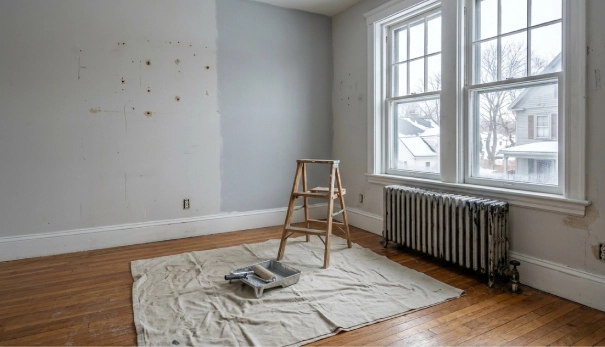
Now the math. For example, say your downstairs unit rents for $1,600 a month and the tenant stops paying in October. It's easy to lose four to six months of rent before the unit is ready for someone new. That's $6,400 to $9,600, before court costs, marshal fees, an attorney and turnover repairs.
And most tenants who fall behind aren't villains. A job ends. Hours get cut. Someone gets sick. Knowing that doesn't pay your mortgage. It's exactly why so many good landlords dread this part, and why some decide they're done.
You Can Sell Your Rental Property With Tenants in Place
Here's what many tired landlords don't realize: you don't have to empty the building to sell it. When you sell with tenants in place, the buyer becomes the new landlord. Under CGS § 47a-21, the sale transfers the security deposits, plus the interest they've earned, to the buyer, who then becomes responsible for returning them. Your attorney handles the paperwork at closing. Our guide on how to sell an occupied rental in Connecticut covers leases, deposits and what to tell your tenants.
Showings work differently, too. Under CGS § 47a-16, tenants can't unreasonably refuse entry when you need to show the unit to buyers, as long as you give reasonable notice and come at reasonable times. A traditional listing can mean weeks of showings in people's homes. With Helpful Home Buyers, it means one walkthrough.
Two- to four-family houses have their own wrinkles. When a buyer uses an FHA loan on a three- or four-unit home, 75% of the appraiser's market rent has to cover the full monthly mortgage payment, a test that knocks out some buyers. Older buildings also bring federal lead disclosure. We explain both in our guide to selling a two- to four-family house in Connecticut.
And if your building is bigger — five units, a mixed-use block, a small apartment building — Dan and Meghan buy those, too. See how we buy commercial property and apartment buildings for cash in Connecticut.
Keep, Fix or Sell? Three Honest Options for Tired Landlords
- Keep it and hire help. A good property manager can take the 10 p.m. calls. But you still pay the fees, the repairs and the taxes, and your name is still on every lease, notice and court filing.
- Fix it, empty it and list it. This can bring the highest headline price. It can also mean months of turnover, lead-safe work in pre-1978 units, weeks of showings, buyer financing that may fall through, and an agent's commission at the end.
- Sell it as-is, tenants and all. A cash buyer takes the building as it stands: tenants, leases, deposits and deferred maintenance. The price reflects the work and the current rents. In exchange, you skip repairs, evictions, showings and commissions, and you pick the closing date.
There's no single right answer. If the building still works for you, keep it. If it doesn't, you deserve a clean way out. Our page on how to sell your rental property in Connecticut explains what we look for. Before you decide, talk with your CPA. Selling a rental can trigger depreciation recapture, and a 1031 exchange may let you defer the gain if you buy another investment property.
Who You Would Actually Be Dealing With
Helpful Home Buyers is Dan and Meghan, a local team based on Howe Avenue in Shelton. They have invested in Connecticut real estate for more than 15 years and bought more than 50 houses, and they buy buildings in any condition, too: multi-families, apartment buildings, retail and more. They restored the historic Daniel Hawley House in Trumbull and bought the former Jeff's Appliance building in downtown Shelton. They hold a 4.6-star average on Google, and you can read reviews from Connecticut sellers before you ever pick up the phone.
What a Cash Sale With Helpful Home Buyers Actually Looks Like
Five steps. No commissions. No repairs. No evictions required. Here's how our cash offer process works, from your side of the table.
- Step 1 — You reach out. Fill out the form below or call. We'll ask a few questions: where the building is, how many units it has, which are rented, what the rents are, and what condition it's in. A few minutes, no pressure.
- Step 2 — One walkthrough. We schedule one visit, with reasonable notice to your tenants. You don't clean, fix or stage anything. We see each unit, the basement and the systems, then leave everyone to get on with their day.
- Step 3 — A written cash offer within 24 hours. Within 24 hours of the walkthrough, you get a written, no-obligation cash offer. Take it to your attorney, your CPA, your family — whoever needs to see it.
- Step 4 — You pick the closing date. Close in as little as about 10 days, or later: after a lease ends, after tax season, whenever works for you.
- Step 5 — Hand over the keys and the leases. At closing, the leases and security deposits transfer to us as the new owner. You pay no commissions, fees or closing costs, and you walk away from the building and the 10 p.m. calls.
Frequently Asked Questions
Read More About Your Specific Situation
Every tired landlord's situation is a little different. We've written a dedicated guide for the three most common ones. Pick the one that sounds like yours.
→ How long does an eviction take in Connecticut? — the summary process timeline, step by step, from the grace period to the marshal.
→ Selling a rental property with tenants in Connecticut — how leases, deposits, showings and fair rent rules work when the building is occupied.
→ Selling a 2–4 family house in Connecticut's cities — FHA limits, lead rules, long-term tenants and the tax questions to bring to your CPA.
Ready to Stop Being the Landlord?
One walkthrough. One written offer. One closing date you choose. Whether your building is full or half-empty, and whether it needs $5,000 of work or $150,000, Helpful Home Buyers can put a no-obligation cash offer in front of you within 24 hours of seeing it. Request a cash offer on your rental property, or call Dan and Meghan directly.