
Can You Sell a House During a Divorce in Connecticut? Automatic Orders, Consent and the 90-Day Wait
You may both agree the house has to go. So why does everyone keep telling you not to touch it?
Maybe you and your spouse decided, in one last calm conversation, that the Stamford townhouse has to be sold. Then your attorney mentioned “automatic orders.” Suddenly you weren’t sure you could even call a buyer. So, can you sell a house during a divorce in Connecticut? Yes — but not the way you would sell it in any other year.
From the moment a Connecticut divorce starts, the house is covered by court orders. Both spouses have to agree in writing, or a judge has to sign off. This guide explains those rules in plain language: what the orders say, the two ways to sell before the divorce is final, how long the process takes, and how a cash offer fits inside the rules. For the bigger picture — buyouts, carrying costs and what a sale looks like — start with our guide to selling a house during a divorce in Shelton and across Connecticut.

Get a fast, no obligation cash offer!
Fill out this form to get started on your fair all-cash offer.
Get Your Fair Cash Offer
Fill In This Form To Get Your No-Obligation All Cash Offer Started!
"*" indicates required fields
What Connecticut’s Automatic Orders Say About Your House
Every Connecticut divorce comes with standing rules called automatic orders, found in Practice Book § 25-5. They arrive with the divorce papers on a court form called the Notice of Automatic Court Orders (JD-FM-158). They take effect for the spouse who files when the papers are signed. For the other spouse, they take effect when the papers are served.
While the case is pending, neither spouse may sell, transfer, encumber, conceal, assign, remove or dispose of property without the other spouse’s written consent or a court order. “Encumber” means borrowing against it, so a new mortgage or home-equity line counts. The orders make narrow exceptions for usual household expenses and reasonable attorney’s fees. Violating them can lead to a finding of contempt.
In practice, listing the house, signing a purchase contract or deeding it to a relative “for safekeeping” all need written consent or a judge’s order. A spouse can also record a notice called a lis pendens on the land records during the divorce (CGS § 46b-80). It warns any future buyer that the house is part of a pending case.
Two Ways to Sell a House During a Divorce in Connecticut
Path 1: Written consent from both spouses
If you both want to sell, put that agreement in writing. Your attorneys can spell out the lowest price you’ll accept, who talks to the buyer, who keeps the house ready for visits, and where the money goes until the divorce is final. If your case is already settled, the separation agreement itself can lay out the sale. Both of you sign the purchase contract. If you are both on title, both of you sign the deed at closing, too.
Path 2: A court order
If one spouse won’t agree, the other can file a motion asking the judge to allow the sale before the final decree. That means waiting for a hearing date, then arguing about price and timing in court. At the end of the case, CGS § 46b-81 also lets the judge order the house sold as part of the decree. A judge can get you to a sale — just not quickly.
CT Homeowners Love Us!
Here’s how HHB helped people move forward—quickly, quietly, and on their own terms.

Sharon Kiraly
Fairfield, CT
..he made a very fair and equitable offer to purchase my home of 30 years and was sensitive to all my cherished memories of living there, raising my family, and then parting, making it a bearable transition.
I’m very grateful to Daniel Riccio.
Louis - Macdonald
Road Trumbull, CT
The entire process ran smooth and the company was extremely accommodating to our family's needs. They were understanding and gave us the opportunity to have extra time after the sale to sort through our belongings. Whatever we no longer wanted they kindly let us keep on the property and they took care of it for us.
I would highly recommend working with them!
Karen Mavilia
Howe Ave Shelton, CT
Second time with Dan Riccio and and his all-star team -- a rental property in 2019, now my home in January 2025. Flawless synchronicity from start to finish. Downright upright ethics -- so rare today. All commitments met and expectations exceeded. 24/7 project management, impressive array of skilled contractors resolved all issues in a timely professional manner. Best of all, I simply took what I wanted and left all remaining contents.
How Long a Connecticut Divorce Takes When You Own a House
Connecticut builds in a waiting period. Under the 90-day rule in CGS § 46b-67, a judge generally can’t grant a divorce until 90 days after the return date on the papers. Waivers are limited to spouses who have a full agreement. And 90 days is the minimum, not the norm. A contested case with a house, children and retirement accounts can run much longer.
There’s no shortcut for homeowners, either. Connecticut’s nonadversarial divorce is a simpler track with strict eligibility rules. One of them is that neither spouse can own any interest in real estate (CGS § 46b-44a). The Office of Legislative Research summary of nonadversarial divorce lists the full requirements. If your names are on a deed, you are on the standard track.
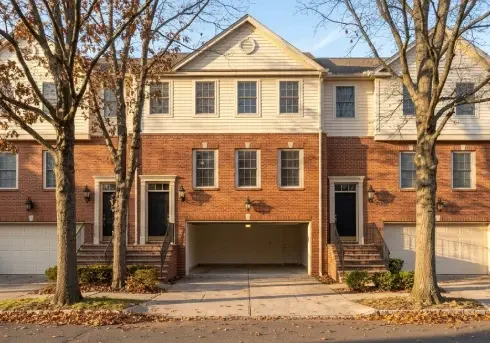
Meanwhile, the mortgage keeps coming due. If you’re wondering how that bill gets handled until the sale, read who pays the mortgage while the divorce is pending.
Selling During a Stamford Divorce: What Commuter Couples Run Into
Stamford divorces are handled in the Stamford-Norwalk Judicial District. If yours involves two careers and a commute, the pattern may sound familiar. One spouse is renting near the train station. The other is still in the house in Glenbrook, Springdale or North Stamford. Condo and townhouse owners also carry association fees on top of the mortgage — one more bill that doesn’t pause for the case.
Distance makes the consent rules harder, not easier. Every document needs both of you. Scheduling showings around two households, two attorneys and a Metro-North timetable wears everyone down. If your house is in Stamford, our page on selling a house in Stamford for cash explains how Helpful Home Buyers buys there: one walkthrough, no showings, no repairs.
Mistakes That Can Backfire Under the Automatic Orders
- Listing on a verbal okay. A handshake is not written consent. Get the agreement to sell in writing before an agent or a buyer walks through the door.
- Borrowing against the house. A new home-equity line or mortgage during the case encumbers the property. It needs the same written consent or court order as a sale.
- Moving the house into one name. Signing a deed to yourself, a relative or a trust is a transfer. Don’t do it without consent or an order.
- Letting the bills slide. The orders don’t freeze the mortgage. Paying usual household expenses is allowed, and a missed payment can hurt both of you.
How a Cash Offer Fits Inside the Automatic Orders
Getting an offer doesn’t sell, transfer or borrow against anything. It gives you information. One spouse can request a written cash offer and share it with the other spouse and both attorneys. Still, tell your attorney before anyone visits the house, and plan the walkthrough together if one of you lives there.
When you’re both ready, both owners sign the purchase agreement, or the sale goes forward under a court order. You pick a closing date that fits your agreement or the court’s schedule. At closing, the mortgage is paid off. The closing attorney can hold the rest in escrow until your agreement or the judge says how to divide it.
Helpful Home Buyers buys houses as-is, so there’s no list of repairs for two people to argue over. Dan and Meghan have bought Connecticut houses for more than 15 years, and every offer they make is in writing, so both attorneys can review the same number. See how we buy houses as-is in Connecticut. And if one of you would rather keep the house, compare the numbers first in our guide to buying out your spouse or selling.
Frequently Asked Questions
Navigation
→ Back to: Selling Your House During a Divorce in Shelton, CT
→ Next: Buying Out Your Spouse vs. Selling the House in Connecticut
→ Service area: Sell Your House in Stamford, CT
External: Connecticut General Assembly (cga.ct.gov) — CGS § 46b-67 — the 90-day waiting period | Connecticut Office of Legislative Research (cga.ct.gov) — Report 2016-R-0213 — nonadversarial divorce eligibility
Get a Written Offer Both Attorneys Can Review
You don’t have to wait for the final decree to find out what the house will bring. Ask for a number now, send it to both attorneys, and decide together when you’re ready. Helpful Home Buyers will put a written, no-obligation cash offer in your hands within 24 hours of one walkthrough. Ask for your written cash offer and keep the next decision on your terms.