
Selling Your House During a Divorce in Shelton, CT — One Written Number You Can Both React To
You are not just selling a house. You are taking apart a life you built with someone else.
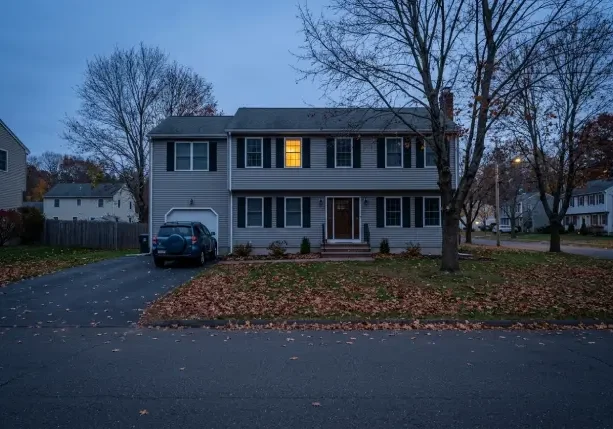
Maybe it’s the colonial in Huntington where you brought the kids home from the hospital. Maybe it’s the raised ranch off Route 8 you bought the year you got married. Now every conversation about it goes through two attorneys, and every choice needs two signatures. If you need to sell your house during a divorce in Shelton, you are carrying two problems at once: a house worth a lot of money, and a marriage that can no longer agree on what to do with it.
This guide is for you — whichever side of the table you’re on. It explains what Connecticut law actually says about the family home in a divorce, why so many couples get stuck on the number, what the house costs you every month the decision waits, and how one written cash offer can turn a long argument into a single yes-or-no decision.
Get a fast, no obligation cash offer!
Fill out this form to get started on your fair all-cash offer.
Get Your Fair Cash Offer
Fill In This Form To Get Your No-Obligation All Cash Offer Started!
"*" indicates required fields
What Connecticut Law Says About Selling a House During a Divorce
Connecticut is not a community-property state. It divides property by “equitable distribution,” which means fair — not automatically fifty-fifty. Under Connecticut General Statutes § 46b-81, when the judge enters the final decree, the court can give the house to either spouse, pass title from one spouse to the other, or order the house sold.
Until that day, the house is frozen in place. Connecticut’s automatic orders (Practice Book § 25-5) take effect for the spouse who files when the divorce papers are signed, and for the other spouse when they are served. From then on, neither of you may sell, transfer, borrow against, hide or give away property without the other spouse’s written consent or a court order. Breaking those orders can lead to a finding of contempt.
So yes — you can sell during a divorce. You just need both signatures in writing, or a judge’s permission. We walk through exactly how that works in our guide to whether you can sell a house during a divorce in Connecticut.
Timing matters, too. Under CGS § 46b-67, most couples wait at least 90 days after the return date on the divorce papers before a judge can grant the divorce. Couples who own real estate can’t use the state’s simpler nonadversarial track at all. If you own a house together, plan on the standard process — and on paying for the house the whole time.
Three Ways a Divorce in Shelton Usually Handles the House
- Sell now and split the proceeds
You both agree in writing to sell, you choose a buyer, and the closing attorney holds or divides the money the way your agreement says. This is often the cleanest path when neither of you can carry the house alone. It also ends the monthly bills and the arguments about repairs. Some couples agree to sell later instead, keeping the house together until a set date — for example, when the youngest finishes school.
- One spouse buys out the other
The spouse who stays pays the other for their share of the equity, usually by refinancing into a new loan in their name alone. It can work well — if the numbers hold up on one income. Before you commit, read our breakdown of buying out your spouse versus selling the house, including the refinance test and the tax rules that follow the house.
- Let the judge decide
If you can’t agree, the court decides at the end of the case, and that can include ordering a sale. But that path runs on the court’s calendar, not yours, and every month of waiting adds mortgage payments, taxes, insurance and attorney time.
CT Homeowners Love Us!
Here’s how HHB helped people move forward—quickly, quietly, and on their own terms.

Sharon Kiraly
Fairfield, CT
..he made a very fair and equitable offer to purchase my home of 30 years and was sensitive to all my cherished memories of living there, raising my family, and then parting, making it a bearable transition.
I’m very grateful to Daniel Riccio.
Louis - Macdonald
Road Trumbull, CT
The entire process ran smooth and the company was extremely accommodating to our family's needs. They were understanding and gave us the opportunity to have extra time after the sale to sort through our belongings. Whatever we no longer wanted they kindly let us keep on the property and they took care of it for us.
I would highly recommend working with them!
Karen Mavilia
Howe Ave Shelton, CT
Second time with Dan Riccio and and his all-star team -- a rental property in 2019, now my home in January 2025. Flawless synchronicity from start to finish. Downright upright ethics -- so rare today. All commitments met and expectations exceeded. 24/7 project management, impressive array of skilled contractors resolved all issues in a timely professional manner. Best of all, I simply took what I wanted and left all remaining contents.
Why Divorcing Couples Get Stuck on the Number
Often the fight isn’t about whether to sell. It’s about what the house is worth. One of you saw a neighbor’s house sell for a record price. The other knows the roof is twenty years old and the kitchen hasn’t been touched since the 1990s. One of you trusts an online estimate. The other trusts the town.
The town’s number won’t settle it either. Shelton revalued property as of October 1, 2025, and Connecticut assessments are set at 70% of market value as of the revaluation date. That is a mass appraisal for tax purposes — not what a buyer will pay for your house, in its condition, this winter.
Each side can hire an appraiser, and sometimes the two appraisals land far apart. Then the attorneys argue about the appraisals. Every hour of that argument is billed, and none of it puts a real buyer at the table.
A written cash offer is different. It is not an opinion of value — it is what a buyer will actually pay, in writing, on a closing date you choose. You can accept it, compare it with what a listing might bring, or turn it down. Either way, both of you are finally reacting to the same real number.
What the House Costs You While a Divorce Drags On
A house doesn’t pause for a divorce. The mortgage, property taxes, homeowners insurance and utilities keep coming — often while one of you is also paying rent somewhere else. For example, if the mortgage, taxes and insurance on a Shelton house come to $3,200 a month, six months of indecision costs about $19,200 before a single attorney bill.
Who pays during the case depends on your agreement, or on temporary orders the judge can enter under CGS § 46b-83 — including support and which spouse gets exclusive use of the home. But the lender isn’t bound by any of that. If both of you signed the note, both of you owe it. We explain how this plays out, and how to protect your credit, in who pays the mortgage during a divorce in Connecticut.
If payments have already slipped, don’t wait for the divorce to finish. Connecticut foreclosures go through the courts, they add legal fees to what you owe, and late payments can show up on the credit report of every borrower on the loan. Our guide to selling your house before foreclosure in Shelton walks through the timeline, and our page on selling a house to avoid foreclosure in Connecticut explains how a cash sale can pay off the loan before the case goes further.
Listing vs. a Cash Sale When Two Owners Must Agree on Everything
A traditional listing asks a divorcing couple to agree, in writing, again and again: the agent, the list price, the repairs, the showings, every price cut, the buyer’s inspection requests and the closing date. Each one can become another round of emails between attorneys.
Selling costs add up, too. Commissions are negotiable, but for example, 5% on a $500,000 house is $25,000. Connecticut’s conveyance tax adds 0.75% for the state on the first $800,000 of the price, plus a 0.25% share for the town (a little more in a few cities) — about $5,000 more at that price. A transfer from one spouse to the other under the divorce decree is generally exempt from that tax (CGS § 12-498) — worth knowing if one of you plans to buy out the other.
Taxes on the gain are a separate question. Under the federal home-sale exclusion explained in IRS Publication 523, married couples filing jointly can generally exclude up to $500,000 of gain, and single filers up to $250,000, if they owned and lived in the home for two of the last five years. Special rules help a spouse who has moved out. Talk to your CPA before you choose a closing date, because whether you’re still married at the end of the year you sell can change which limit applies.
A cash sale skips most of that list. Helpful Home Buyers buys houses in any condition, so there are no repairs to argue about and no showings to schedule around two households. You can read more on our page about selling your house as-is for cash.
What a Cash Sale With Helpful Home Buyers Actually Looks Like
Five steps. No commissions. No showings. No bank financing to fall through.
- Step 1 — One of you reaches out (or both of you do). Fill out the form below or call. We’ll ask a few basic questions about the house, its condition and whether a divorce case has been filed, so the offer can be written the right way from the start.
- Step 2 — One walkthrough. We visit once, on your schedule. You don’t clean, stage or repair anything. If you two would rather not be there at the same time, that’s fine — whoever has access can meet us.
- Step 3 — A written offer within 24 hours. You get a written, no-obligation cash offer within 24 hours of the walkthrough. Send the same number to both spouses and both attorneys. Nobody has to decide on the spot.
- Step 4 — Both signatures, or the court’s approval. Because of the automatic orders, the sale needs both spouses’ written consent or a court order. Your attorneys can review everything before anyone signs.
- Step 5 — You pick the closing date. Close in as little as about 10 days, or later to line up with your agreement or the decree. No commissions or fees come out of your proceeds. Ask us how closing costs and the conveyance tax are handled in your written offer, so both sides see the real net number.
Helpful Home Buyers is Dan and Meghan, right here on Howe Avenue in Shelton. They have spent more than 15 years buying Connecticut houses — more than 50 of them — including the historic Daniel Hawley House in Trumbull, which they restored. You can meet Dan and Meghan, see how our cash home-buying process works, and read reviews from Connecticut homeowners behind our 4.6-star Google rating.
Frequently Asked Questions About Selling a House During a Divorce in Connecticut
Read More About Your Specific Situation
Divorce home sales usually come down to one of three questions. We wrote a separate guide for each one — pick the one that matches where you are.
→ Can you sell a house during a divorce in Connecticut? — the automatic orders, written consent, court orders and the 90-day wait, step by step.
→ Should you buy out your spouse or sell the house? — the equity math, the one-income refinance test and the tax rules that follow the house.
→ Who pays the mortgage while the divorce is pending? — temporary orders, both names on the loan, and how to keep late payments from becoming a foreclosure.
Ready to Put One Number on the Table?
One offer. One closing date. One decision you can make together, even if you can’t agree on much else right now. Whether you’re still in the house or already moved out, whether it needs a new roof or nothing at all, Helpful Home Buyers can put a written cash offer in front of both of you within 24 hours of one walkthrough. Request your no-obligation cash offer, share it with your attorney, and decide on your own timeline.